
Will a dehumidifier under the house fix the damp?
Usually not on its own. A dehumidifier dries the air in a closed space. Under a house with open vents, new air keeps coming in and damp ground keeps adding moisture, so it can run all day without catching up. It makes more sense in a closed room, or in a space that's been sealed.
One thing to be upfront about: we install sub-floor fan systems, so we have a stake in this. We've set out the reasoning and the sources so you can judge for yourself.
Why does a dehumidifier struggle under a house?
It's working against two things at once. The vents keep letting in new air, and the ground keeps giving off moisture. In the US, building scientist Allison Bailes of Energy Vanguard describes a vented crawl space in Atlanta where the dehumidifier ran the whole time he was there. He took no readings, but his reasoning holds: it can't dry all the outside air coming in, and wet, uncovered soil keeps adding more. Atlanta's climate isn't Sydney's, but the problem is the same one.
There are practical problems as well:
- The water has to go somewhere. A tank under the floor needs emptying, so a permanent setup needs a drain.
- It needs power under the house. We wouldn't run one off an extension lead on damp ground. A proper outlet is a job for a licensed electrician.
- It only helps nearby. Air under a house doesn't mix much on its own, so the far corners can stay damp.
When does a dehumidifier make sense?
- In a closed room. For one damp bedroom or a laundry, with the door and windows shut, it does what it's built to do.
- For a short time after a leak or flood, to help dry out a closed area.
- In a sealed space. Bailes, writing for Green Building Advisor, would seal a crawl space and add a dehumidifier if he had to pick one method. That's a legitimate approach, but it's a much bigger building job than fitting a machine. Talk to a builder if you want to go that way.
What else can you do about damp under the house?
Work through these in order, because the first ones are the cheapest:
- Stop water getting in. Check gutters, downpipes and leaking pipes, and where the ground slopes. No fan or dehumidifier fixes water running under the house.
- Clear the vents. NSW Health says to make sure the weep holes and air vents at the base of your home are uncovered. Decks, paving and garden beds often block them.
- Cover the ground. For excessively damp ground, the National Construction Code lists an impervious membrane as an option for new building work. Rock and tight access can make this hard in older homes. If yours was built or renovated before 1990, it may contain asbestos, so find out what's there before anyone works under it.
- Move the air. The same code lists 50% more vent openings as another option, to protect the framing. It doesn't mention fans. Brick vents only work when wind happens to push air through them, and a fan system moves the air every day, whatever the weather.
How is a fan system different?
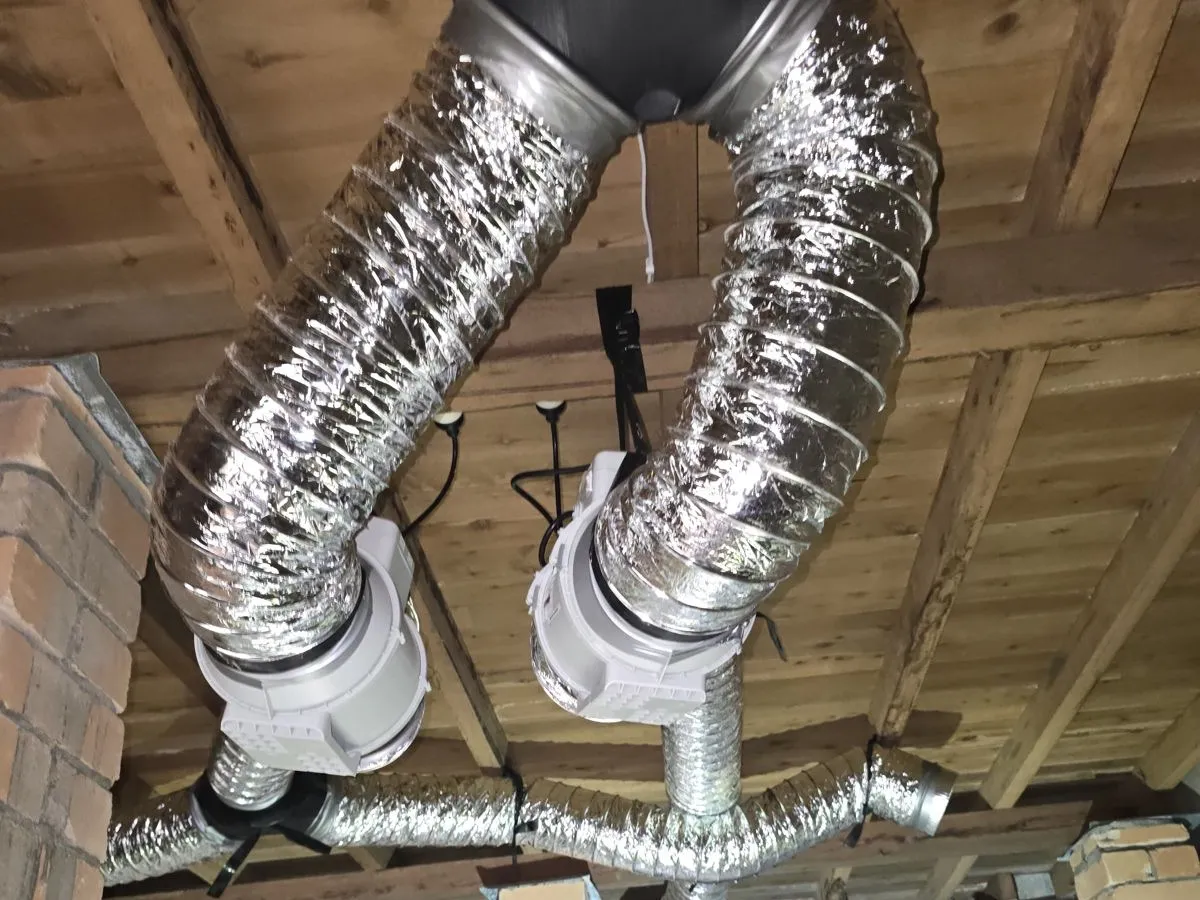
It doesn't try to dry the air. It replaces it. A small fan and a duct run draw the damp air out from under the house, and outside air comes in through your existing vents. That air doesn't have to be dry, only drier than the air sitting over damp ground.
That also sets its limit. A fan can only bring the air under the floor down to about the moisture level outside. That's a real gain in the cooler months, and much less in humid summer weather.
You should know the other side too. Writing about humid parts of the US, Bailes says outside air often holds more moisture than crawl space air, that a small exhaust fan could work but is probably less reliable than feeding it air from the home's air conditioning, and that large fans are a quick way to rot the wood. Climate matters here, and Sydney's isn't Atlanta's, but it's a fair question to ask anyone quoting you, including us.
We size the fans and the duct run to your house, so the air moves across the whole sub-floor. We fit German-engineered Blauberg fans, and the warranty is with us for 7 years. Most installs take four to six hours, with two of us on site. There's no tank to empty.
It won't suit every house. If water is running under the floor, that needs fixing first, and we'll tell you so.
Not sure what your sub-floor needs? Book a time for us to look. We'll photograph what we find and send you a written quote, or tell you if we think the cause is something else.
In the Eastern Suburbs or Inner West? Book your inspection here. Prefer to talk now? Call 0466 805 580.
Common questions
Can I just put a dehumidifier in the room above?
Yes, and it can help that room, but it won't change what's happening under the floor. If the damp starts down there, it'll keep coming up.
Is a fan system noisy?
Not much. We hang the fans on suspension mounts to cut vibration, and they run at a low hum, under 41 decibels.
I've already got brick vents. Why is it still damp under there?
Brick vents only work when wind happens to push air through them, and many are now partly blocked by decks, paving or garden beds. A fan system moves the air every day, whatever the weather.
Where this comes from
Sources checked on 7 November 2026.
- Energy Vanguard, Turn Off That Dehumidifier (Allison Bailes, US)
- Green Building Advisor, Five Ways to Deal with Crawlspace Air (Allison Bailes, US, 2013)
- NSW Health, Mould fact sheet (last updated 20 December 2022)
- National Construction Code 2022, Housing Provisions, Part 6.2 Subfloor ventilation
- NSW Government, Asbestos (NSW Planning)
