
How to reduce humidity in your house
Buy a cheap humidity meter, run your exhaust fans, air the house when it's drier outside and fix any leaks. If the reading stays high, or the house still smells musty, the moisture may be coming from under the floor. Here's how to work out which, starting with the things you can do yourself.
How humid is too humid?
Aim for under 60%. The Australian Building Codes Board says simple comfort measures often use 30% as a lower limit and 60% as an upper limit, and that mould can develop once humidity at a surface goes above 70%. The US Environmental Protection Agency gives similar advice: below 60%, and ideally 30 to 50%.
Two things make one reading less simple than it looks:
- Sydney air is humid to begin with. Bureau of Meteorology averages for Observatory Hill in autumn are about 72 to 74% at 9am and 57 to 62% at 3pm. A high reading on a muggy morning doesn't mean your house has a problem. Part of that number is temperature too: cooler air reads higher with the same water in it. So watch the trend over a week, and which rooms stay the worst.
- Cold surfaces are damper than the room. The corner behind a wardrobe can reach mould conditions while the meter in the middle of the room looks fine.
Where does the moisture come from?
- Daily life: showers, cooking, doing laundry and drying clothes inside.
- Things in the house: NSW Health lists humidifiers, fish tanks, indoor plants and unflued gas heaters.
- Leaks: burst pipes, a leaking roof or a blocked gutter.
- The ground: if your house sits off the ground, damp soil under it keeps adding moisture.
What can you do yourself?
- Run your exhaust fans when you shower, cook, do laundry or dry clothes. Leave the bathroom fan on for about 10 minutes afterwards. That's the run-on time the building code sets for new bathrooms without natural ventilation, and it's a good habit in any bathroom.
- Air the house on dry, breezy days. Sydney's lower afternoon reading is mostly warmer air, not less water, so go by the weather rather than the clock.
- Dry clothes outside when you can. If you dry them inside, run the exhaust fan and keep that room's door shut.
- Move furniture a little off outside walls, so air can get behind it.
- Fix leaks and gutters before anything else that costs money.
- Cut back the extra sources in the list above.
- Clear the vents. NSW Health says to make sure the weep holes and air vents at the base of your home are uncovered.
- Use a portable dehumidifier in a closed room if one room is the problem. That's the job it does well. Under the house is a different story.
Why does the moisture sometimes start under the floor?
A house that sits off the ground can have damp soil beneath it, and air that doesn't move much. The National Construction Code takes this seriously for new building work. It requires openings in the sub-floor walls and no dead air spaces. Where the ground is excessively damp, its options include 50% more vent openings or sealing the ground with a membrane. Older homes weren't necessarily built to the current rules, and many have had decks and paving added over their vents since.
So if you've done the list above and the humidity is still high, look for these signs. You can check them without going under the house:
- A musty smell that comes back soon after you air the house.
- Mould on clothes and shoes in wardrobes, or behind the bedhead.
- Floors that feel cool and damp underfoot.
- A building or pest inspector has said the sub-floor needs more ventilation.
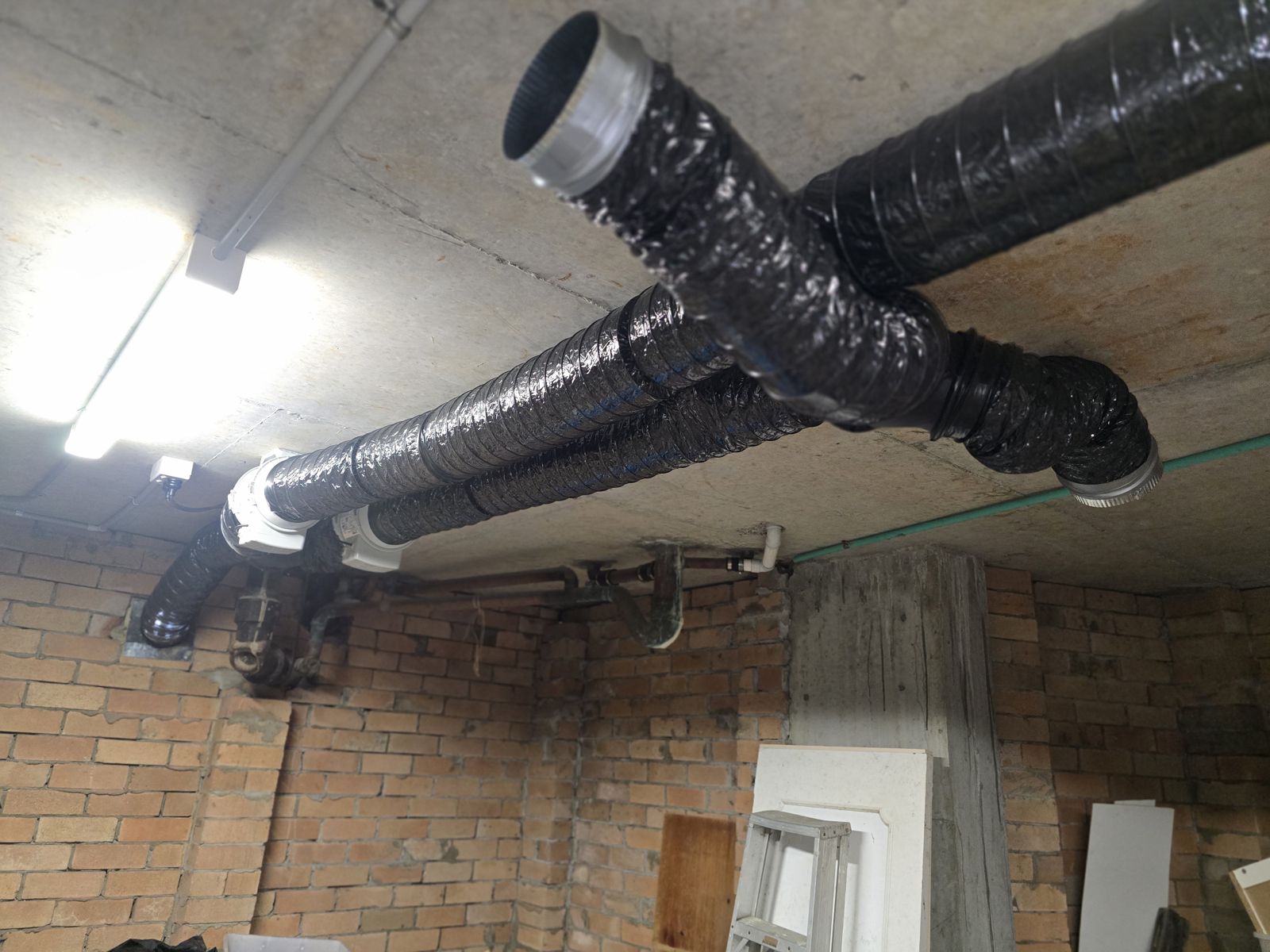
Twin-duct system fixed to a concrete slab soffit.
What can be done about damp under the floor?
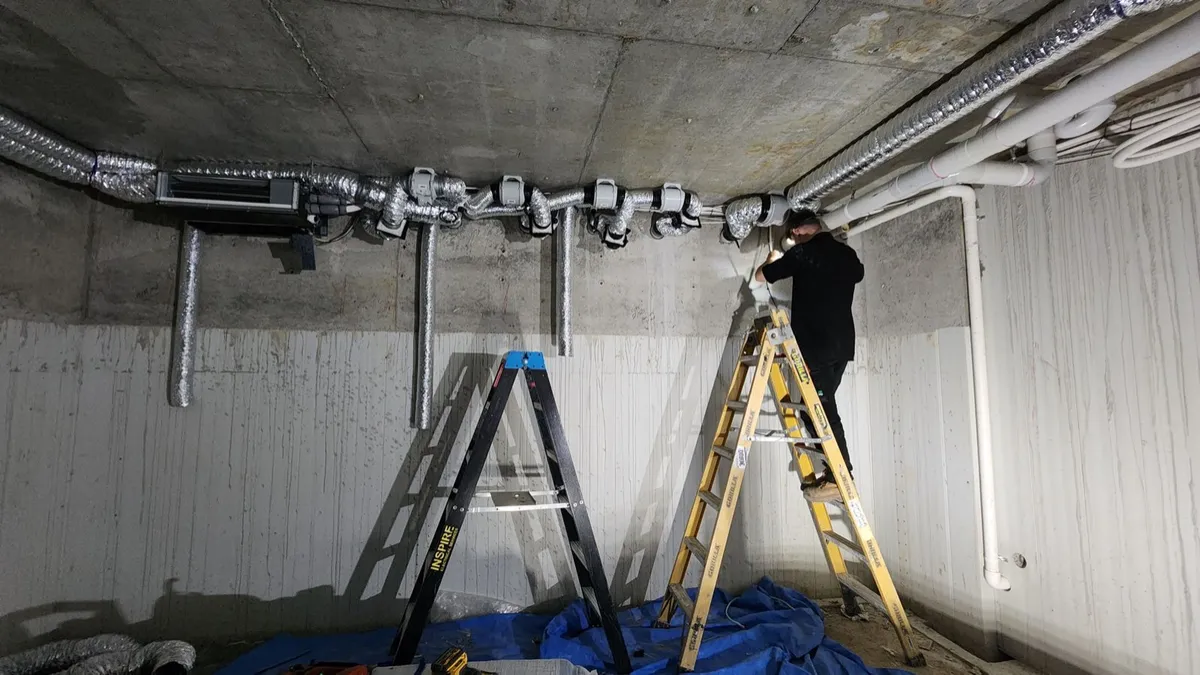
We install sub-floor fan systems: a small fan, a duct run and a controller. The fan draws damp air out from under the house, and drier air comes in through your existing vents. We size the fans and the duct run to your house, so the air moves across the whole sub-floor.
It deals with moisture coming from under the floor. It won't do much about steam from a shower, so your exhaust fans still matter.
Done the list and the house still feels damp? Book a time for us to look under the house. You get a written quote with the photos and where the fans and ducts will go.
In the Eastern Suburbs or Inner West? Book your inspection here. Prefer to talk now? Call 0466 805 580.
Common questions
Will opening the windows lower the humidity?
It helps when the air outside is drier than the air inside, so a damp, still day isn't the time for it. NSW Health says to open windows when the weather permits, to improve cross ventilation.
Do I need a humidity meter?
It isn't essential, but it's a cheap way to stop guessing. It shows whether the things you're trying are working, and which room is the worst.
Do you do the electrical for the fans too?
Yes. We're licensed electricians, so the power, the controller and the fans are all one job and one quote.
Where this comes from
Sources checked on 7 November 2026.
- Australian Building Codes Board, Condensation in Buildings handbook (2019)
- US Environmental Protection Agency, A Brief Guide to Mold, Moisture and Your Home
- Bureau of Meteorology, Climate statistics for Sydney (Observatory Hill), humidity averages 1955 to 2010
- NSW Health, Mould fact sheet (last updated 20 December 2022)
- National Construction Code 2022, Housing Provisions, Part 10.8 Condensation management
- National Construction Code 2022, Housing Provisions, Part 6.2 Subfloor ventilation
