
How to stop mildew coming back in your home
Clean it off with mild detergent or diluted vinegar, dry the surface, then find the moisture feeding it. NSW Health says mould needs moisture and nutrients to grow, so if you only clean, it tends to come back. Most of the fixes below cost little or nothing, so start there.
Mildew is the word most people use for thin surface mould on walls, ceilings, curtains and clothes. The cleaning and the causes are the same, so we'll treat them as one problem.
How do you clean mildew off safely?
This is the government health advice, in the order you'd do it:
- Get air moving through the room while you work.
- Wear rubber gloves and eye protection. Better Health Channel (Victorian Government) also suggests a P1 or P2 face mask, and says to ask your doctor before using a P2 mask if you have a heart or lung condition.
- Wipe it with mild detergent, or 4 parts vinegar to 1 part water. Don't dry brush it, because that can flick spores into the air.
- If it won't shift, NSW Health suggests 250 ml of bleach in 4 litres of water. Never mix bleach with ammonia, acids or other cleaners, because that can release hazardous fumes. Vinegar is an acid, so if you've used it, rinse with clean water and air the room before you use bleach.
- Dry the surface completely.
- Wash clothing and bedding in a washing machine on a hot cycle.
Small to medium areas are fine to do at home. If large areas keep growing back, Better Health says to talk to a mould remediation professional.
Who shouldn't do this: Better Health says some people shouldn't remove mould or be there while it's removed, including pregnant women, children, and people with weakened immune systems or chronic lung disease. NSW Health says people with asthma, allergies or other breathing conditions may be more sensitive. If you or your family feel unwell after contact with mould, see your doctor.
Why does mildew keep coming back?
Because the moisture is still there. In a house it usually comes from one of three places:
- Daily life: showers, cooking, doing laundry and drying clothes inside.
- A leak: a burst pipe, a leaking roof or a blocked gutter.
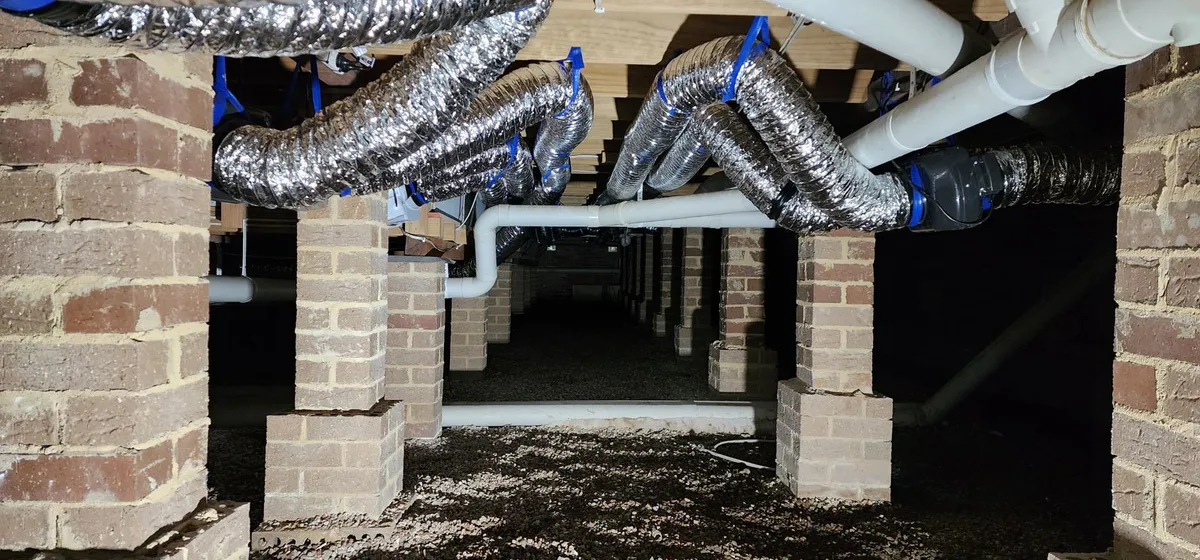
- Under the floor: damp ground beneath a house that sits off the ground.
Where it shows up is a good clue. On a bathroom ceiling, start with the exhaust fan. In wardrobes and behind the bedhead, first move furniture off outside walls so air can get behind it. If it comes back and your house sits off the ground, consider the sub-floor.
What should you try first?
- Turn on exhaust fans when you shower, cook, do laundry or dry clothes.
- Open windows when the weather permits. Dry, breezy days do the most good.
- Fix leaks, burst pipes and blocked gutters.
- If water has got in, completely clean and dry carpets and building materials. Throw out anything you can't dry.
- Cut back on humidifiers, fish tanks, indoor plants and unflued gas heaters, which NSW Health lists as sources.
- Uncover the weep holes and air vents at the base of your home.
Done all that and it's back within weeks? Then the moisture is coming from somewhere you haven't reached yet.
How can you tell if it's coming from under the floor?
This applies to houses that sit off the ground on piers or walls, not to a house on a concrete slab. You can check these signs without going under there:
- A musty smell that comes back soon after you air the house.
- Mould on clothes and shoes in wardrobes, or behind the bedhead.
- Floors that feel cool and damp underfoot.
- A building or pest inspector has said the sub-floor needs more ventilation.
"I've already got brick vents" is the thing we hear most. Brick vents only work when wind happens to push air through them, and many are now partly blocked by decks, paving or garden beds. Meanwhile, damp ground keeps adding moisture.
Before you go looking: if your house was built or renovated before 1990, NSW Government advice is that it's likely to contain asbestos. Don't go into the roof space or sub-floor if you think there could be loose-fill asbestos insulation, which can only be identified by testing. If in doubt, stay out. Don't touch cables or insulation.
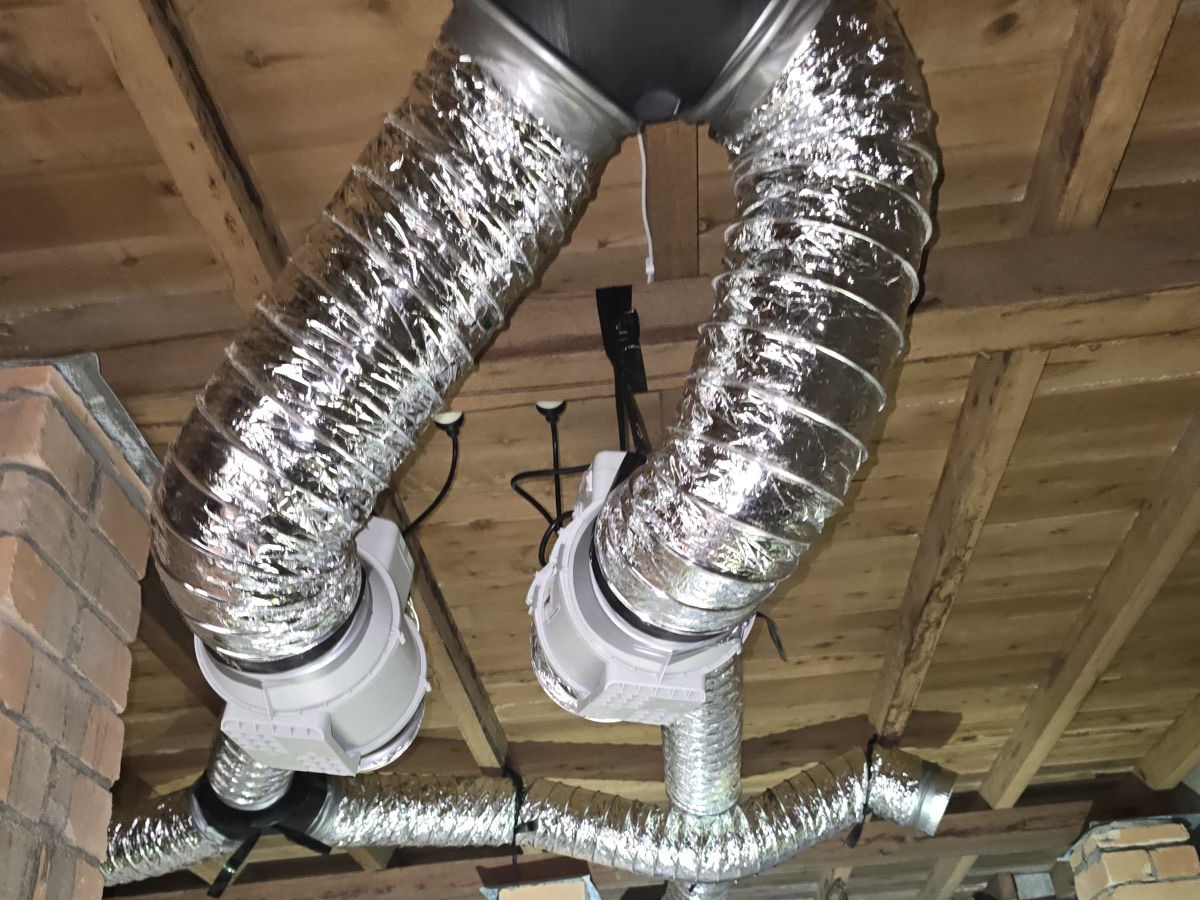
Ducting worked around sandstone and brick under the floor.
What can be done if the damp is under the floor?
We started as electricians, and we added ventilation because we kept finding the same damp problems under the houses we were wiring. The fix we install is a sub-floor fan system: a small fan, a duct run and a controller. The fan draws damp air out from under the house, and drier air comes in through your existing vents.
It won't fix a leaking roof or a shower with no exhaust fan. That's why the look comes first. We come and look under the house, photograph what we find, and tell you if we think the cause is something else.
Think the damp is coming from under your floor? Book a time for us to look, and you get a written quote with the photos.
In the Eastern Suburbs or Inner West? Book your inspection here. Prefer to talk now? Call 0466 805 580.
Common questions
Do I need a mould test?
Usually not. NSW Health says most mould is visible, so it's generally not necessary to test for it at home, though some can sit in cavities or the ceiling.
Will a fan system get rid of the musty smell?
If the smell is coming from damp under the floor, moving that air out is what fixes it. We'll tell you at the look if we think the cause is something else.
Is sub-floor ventilation the same as subfloor or underfloor ventilation?
Yes. People spell it all three ways. It all means moving damp air out from under a house that sits off the ground.
Where this comes from
Sources checked on 7 November 2026.
